Wasp, Hornet & Yellow Jacket Control in Metro Atlanta & North Georgia
Nest removal and treatment for paper wasps, hornets and yellow jackets around your home.
About Wasps, Hornets & Yellow Jackets in Georgia
Stinging insect nests tend to show up in the worst places: under eaves, in porch ceilings, on grill covers, in attics and in the ground along a walkway. A nest near a door, a deck or a play area is a safety issue, particularly for anyone with an insect sting allergy.
We do not recommend DIY removal of large nests. Disturbing a nest can bring dozens of stinging insects at once. Our technicians have the equipment and training to treat nests safely.
Schedule Service Call (770) 914-6783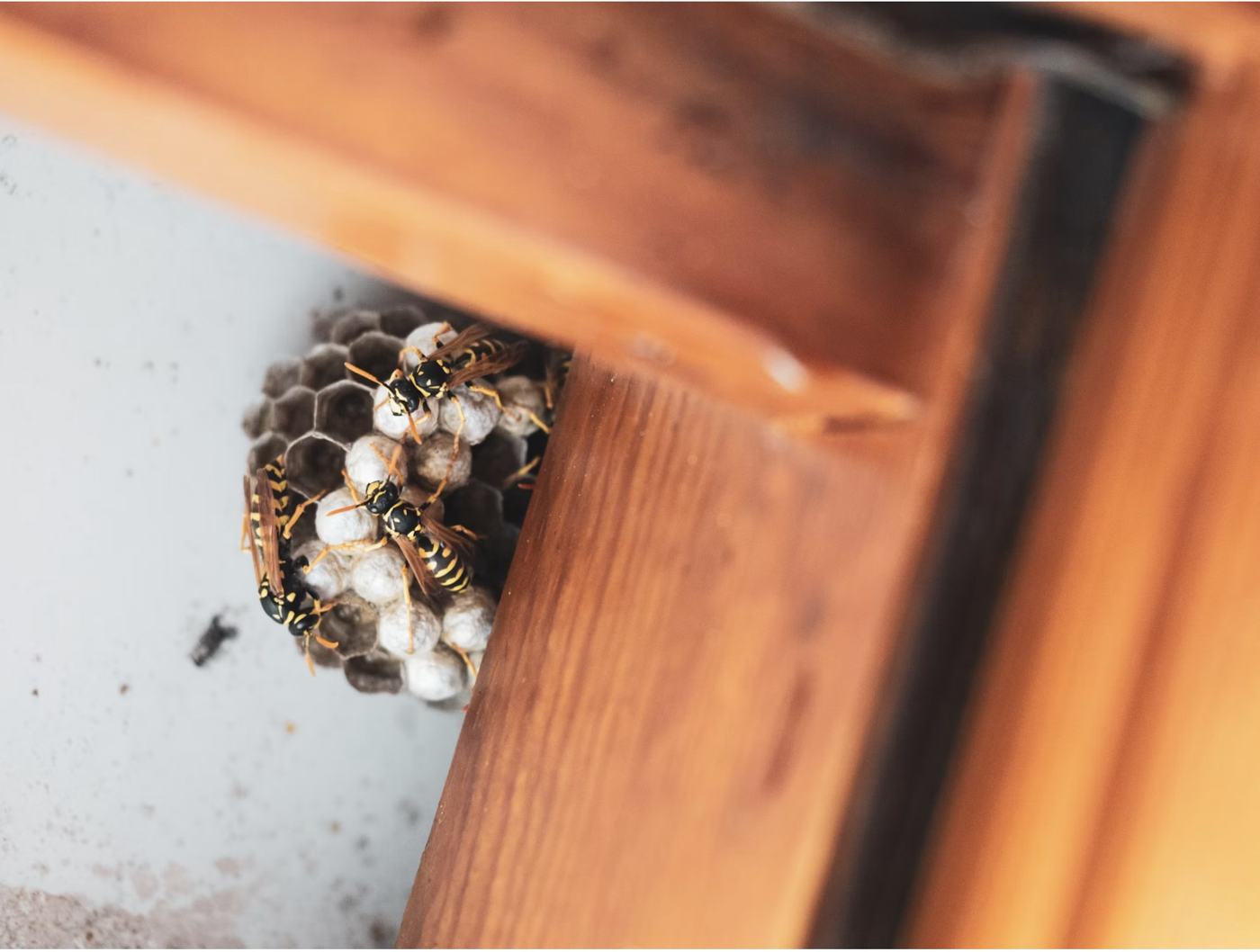
How to Identify Wasps, Hornets & Yellow Jackets
Paper wasps build open, umbrella-shaped nests with visible cells and have long, slender bodies and dangling legs in flight. Bald-faced hornets build large gray, football-shaped aerial nests. Yellow jackets are stocky, black and yellow, often nest underground or in wall voids, and are aggressive, especially in late summer and fall.
Signs You May Have Wasps, Hornets & Yellow Jackets
- A growing nest under eaves, in soffits, in shrubs or on porch ceilings
- A steady stream of wasps entering a small hole in the ground or a wall
- Wasps repeatedly around garbage cans, outdoor eating areas or hummingbird feeders
- Buzzing sounds inside walls or the attic
- Individual wasps indoors, which can mean a nest in the structure
Why Wasps, Hornets & Yellow Jackets Are a Problem in Georgia
Georgia's long warm season gives wasp colonies a lot of time to grow. Nests typically start small in spring and become much larger and more defensive by late summer, which is when most stings occur.
How Accurate Pest Solutions Handles Wasps, Hornets & Yellow Jackets
Locate the nest
We look for all nests, including ones that are hard to see, such as in wall voids or underground.
Treat and remove
We treat the nest, and remove it where appropriate, based on its type and location.
Prevent rebuilding
Treating likely nesting spots can discourage new nests.
Advise on safety
We'll tell you what to do and what to avoid while treatment takes effect.
Prevention Tips
- Inspect eaves, porches, sheds and grills every few weeks in spring and summer
- Keep garbage cans sealed
- Cover or clean up sweet drinks and food when outdoors
- Seal cracks and holes in siding and soffits
- Do not attempt to knock down or spray large nests yourself
Related Services
Carpenter Bees
Perfectly round holes in decks, eaves and fascia boards — and sawdust piles below.
Learn more →Pest Control Plan
Our most popular plan: a visit every other month plus unlimited free retreats for covered pests.
Learn more →Spiders
Brown recluse, black widow, wolf spiders and more — plus web removal on every visit.
Learn more →Wasps, Hornets & Yellow Jackets FAQ
Are wasps covered on your pest control plan?
Paper wasps are covered on our bi-monthly Pest Control plan. For hornets or yellow jackets, call us for a quote.
What if I find honey bees?
Honey bees are important pollinators and are often better handled by a local beekeeper who can relocate the colony. If you are unsure what you have, call us and we'll help identify it.
When is wasp season in Georgia?
Nests begin in spring and are at their largest and most aggressive in late summer and early fall.
Is it safe to remove a nest myself?
For small, new nests in easy-to-reach places, some homeowners do. For anything large, high up, underground or inside a wall, call a professional. If anyone in your home is allergic to stings, always call a professional.
Where We Serve
We provide pest, termite, mosquito and wildlife control across 16 counties in Metro Atlanta and North Georgia. Find your city: